

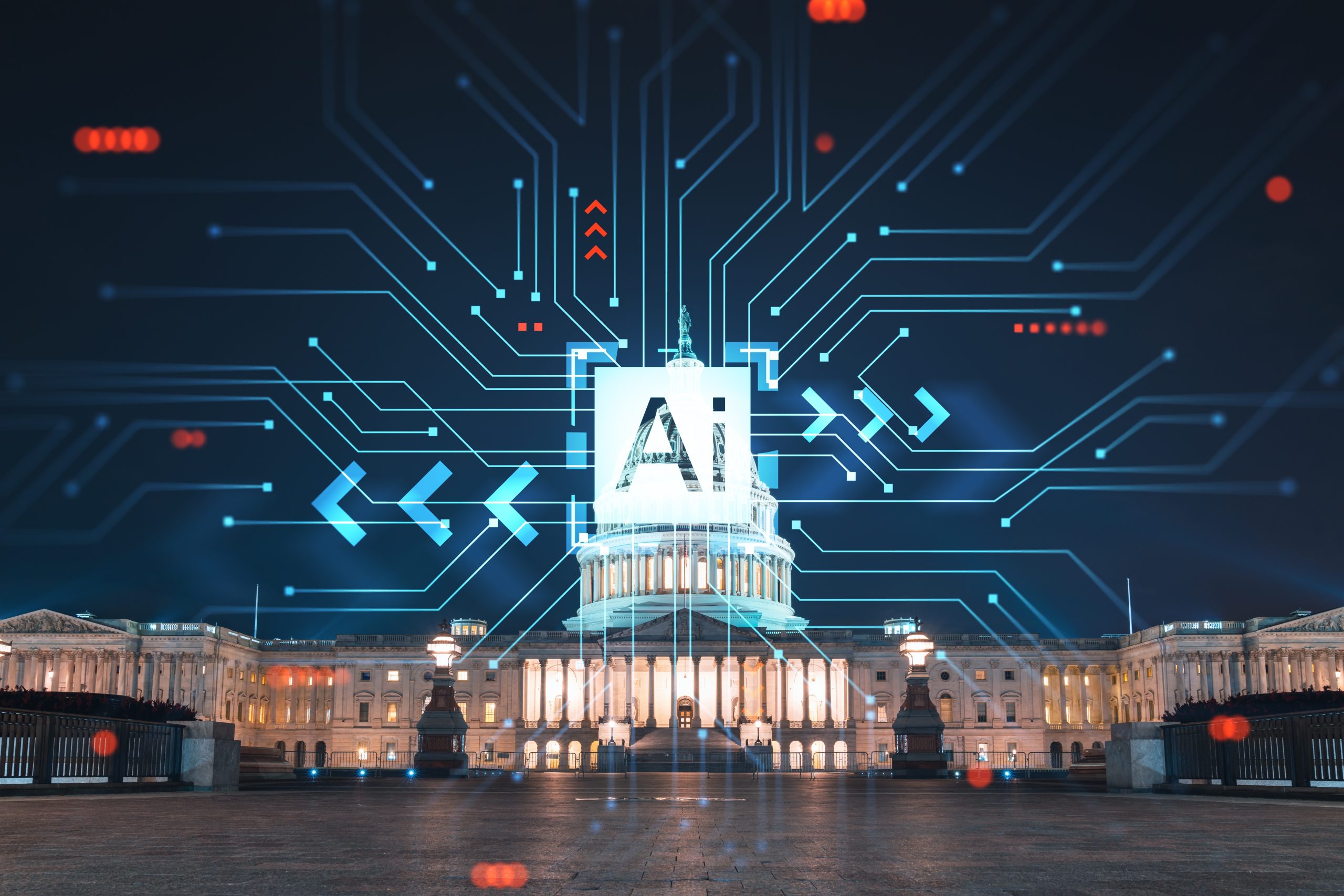
What agencies need to know about deploying AI responsibly in 2025
Artificial intelligence (AI) in the public sector is no longer a distant vision—it’s rapidly becoming a strategic imperative. While data security concerns and strict compliance requirements have historically slowed AI adoption among government agencies, momentum is shifting. In 2024, federal agencies more than doubled their active AI use cases, and the launch of ChatGPT Gov in January 2025 signals a turning point for secure, responsible AI implementation across all levels of government.
Purpose-built for public sector use, ChatGPT Gov opens the door for AI enablement in a way that satisfies long-standing government concerns around data sovereignty, privacy, and compliance. Unlike traditional SaaS models, ChatGPT Gov is a self-contained deployment—allowing agencies to license OpenAI’s code, host it within their secure environments, and fully manage permissions and data governance internally. This structure significantly reduces the hurdles typically involved in authorizing generative AI use with sensitive or non-public data.
What Makes ChatGPT Gov a Game-Changer?
ChatGPT Gov empowers agencies with the latest advancements in large language models (LLMs)—offering tools for summarizing documents, analyzing complex datasets, coding support, and custom chatbot development—all within an environment aligned with government IT standards.
This model gives agencies full control: they can enforce single sign-on, set role-based access controls, and develop custom GPTs to streamline workflows and automate administrative processes—all while maintaining compliance with frameworks such as FedRAMP, NIST, and CISA guidance.
High-Impact Applications: Where AI Can Deliver Immediate Value
While the possibilities for AI in the public sector are expansive, three areas stand out as immediate opportunities:
-
Operational Efficiency
Automating repetitive administrative tasks can save valuable time and reduce long-term staffing pressures. In a pilot program, ChatGPT Gov users reported reclaiming over 100 minutes per day, allowing teams to focus on higher-value work. -
Research and Analysis
AI can synthesize massive volumes of information quickly, identify key trends, and provide data-driven recommendations—serving as a real-time research assistant for policy makers, analysts, and operational leaders. -
Citizen Service Delivery
AI-powered chatbots can guide users through complex services, deliver multilingual support, and improve accessibility. Generative models also enhance predictive capabilities to support more strategic resource allocation and planning.
Navigating the Risks: AI with Purpose and Precision
As public sector AI adoption accelerates, risk management must keep pace. Data privacy, bias, compliance, and cybersecurity remain critical concerns—especially in high-stakes government environments. In response, NIST’s 2024 AI Risk Management Framework provides valuable guidance to help agencies deploy AI responsibly and ethically.
To fully harness AI’s power, public entities must align their IT infrastructure, workforce readiness, and governance models around secure, scalable AI use. That starts with a clear strategy and a comprehensive understanding of risk.
MEC Is Here to Help
At Millennium Enterprise Corporation (MEC), we partner with government agencies to plan, implement, and optimize secure AI environments through our Infrastructure Engineering-as-a-Service (IEaaS) Solution for AI Enablement. We also offer a structured AI Risk & Readiness Assessment to help you evaluate use cases, identify risks, and ensure alignment with mission goals and compliance standards.
Let’s build the foundation for responsible AI together. Contact MEC today to begin your AI enablement journey.
MEC Community Insights

MEC Awarded NASA SEWP VI Contract | Federal IT Procurement Solutions